A German cockroach infestation differs fundamentally from incidental outdoor pests like American or smokybrown roaches. Blattella germanica survives exclusively indoors near moisture and heat sources, nesting in…
A German cockroach infestation differs fundamentally from incidental outdoor pests like American or smokybrown roaches. Blattella germanica survives exclusively indoors near moisture and heat sources, nesting in refrigerator compressor coils, cabinet frame crevices, and dishwasher panels. Over-the-counter pyrethroid bug sprays scatter these colonies deeper into drywall voids, a process known as budding, which multiplies harborage zones across adjacent rooms. In the dense multi-family complexes of Uptown and Deep Ellum, shared plumbing chases allow unchecked colonies to migrate between units within 72 hours of ineffective broadcast spraying. For single-family residences in Lake Highlands, Lakewood, and Preston Hollow, infestations frequently arrive via cardboard delivery packaging, secondhand appliances, or grocery sacks, quickly taking hold around garbage disposals and under-sink pipe collars.
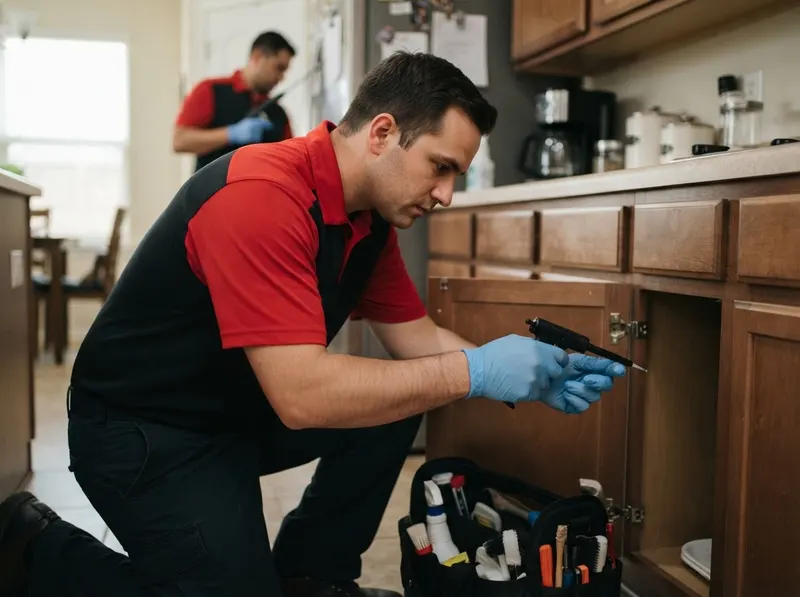
Eradication relies on bait acceptance and reproductive disruption rather than room-fogging. Technicians place precise, pea-sized deposits of specialized gel matrices containing active ingredients such as abamectin or indoxacarb directly along cabinet ledger boards, drawer glides, and behind outlet faceplates where roaches forage. When female roaches feed, the delayed-action bait transfers throughout the aggregation via horizontal transmission as nymphs consume contaminated feces and exuviae. Pairing this with hydroprene or pyriproxyfen insect growth regulators halts the sexual maturation of nymphs, preventing new oothecae (egg cases containing 30 to 48 eggs) from producing viable offspring. This method eliminates the primary trade-off of older pest control approaches: occupant evacuation is minimal, air quality remains protected, and active ingredients stay entirely out of family food preparation surfaces.
Older construction in Oak Cliff and Bishop Arts often features pier-and-beam foundations and settled wall framing with wider expansion gaps behind baseboards. These structural voids require deep-void dust injections with amorphous silica gel, which physically dehydrates the insect cuticle without introducing wet pesticide odors. Larger kitchen footprints typical of Far North Dallas estates expand the treatment perimeter to include built-in pantry millwork and dual refrigerator units, requiring a higher volume of targeted bait placements. Because German roach eggs hatch in approximately 28 days and are naturally impervious to liquid applications while sealed in the ootheca, complete relief often necessitates an organized follow-up assessment 14 to 21 days after initial service. For inquiries or dispatch, contact (945) 410-2399.
Every job gets a firm, written price after a free on-site visit.
Tell us about your german cockroach eradication job in Dallas and we'll send a clear, written quote, usually the same day.
 Red Wagon Pest Control