Commercial food prep facilities face intense pest pressures due to Dallas County's ambient humidity and the heat generated by walk-in compressor units, commercial dishwashers, and line equipment. A standard general…
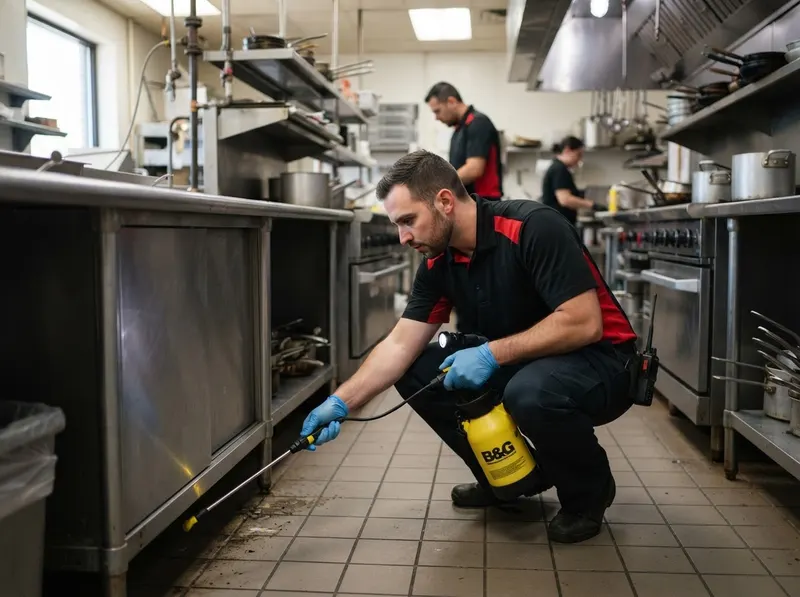
Commercial food prep facilities face intense pest pressures due to Dallas County's ambient humidity and the heat generated by walk-in compressor units, commercial dishwashers, and line equipment. A standard general spray protocol is inadequate and prohibited over open food contact surfaces; professional intervention relies on micro-encapsulated bait matrices, non-volatile insect growth regulators, and mechanical exclusion along stainless-steel splash guards and drywall junctions. Operations in historic spaces throughout Deep Ellum, Bishop Arts District, and Oak Cliff frequently contend with structural gaps in aging brickwork and shared plumbing runs, which permit indoor transit for rodent populations seeking moisture. In newer high-volume hospitality hubs across Uptown and Far North Dallas, grease traps, beverage dispatch lines, and mop sinks serve as primary breeding habitats for drain fly and phorid fly larvae.
Selecting treatment frequency depends on culinary volume and municipal audit cycles. High-capacity kitchens benefit from bi-weekly service rhythms, maintaining continuous IGR residual barriers to break the 21-day reproductive cycle of the German cockroach before Dallas Environmental Health officers conduct random inspections. Smaller cafes, prep bakeries, and standalone kitchens in Lakewood, Lake Highlands, or Preston Hollow often utilize monthly rotation programs once baseline eradication is achieved. The primary operational trade-off centers on non-chemical mechanical repairs versus recurring chemical remediation: sealing conduit penetrations with copper mesh and elastomeric silicone permanently reduces structural harboring points, whereas relying solely on bait stations requires indefinite monitoring and higher chemical expenditures.
1. Initial structural inspection identifies entry points, floor sink organic matter accumulation, and voids behind equipment panels.
2. Sanitation barrier application delivers non-repellent baits beneath refrigeration motors, dry storage shelving, and dish tables where grease and heat concentrate.
3. Drain line biocatalytic foaming digests organic biofilm inside floor drains to destroy fly pupae without corroding commercial cast iron or PVC piping.
4. Exterior-to-interior exclusion seals conduit gaps along exterior brick walls, delivery roll-up doors, and loading docks.
5. Digital reporting provides itemized pest activity tracking, chemical SDS logs, and technician signatures for immediate municipal health department validation.
Every job gets a firm, written price after a free on-site visit.
Tell us about your commercial kitchen pest service job in Dallas and we'll send a clear, written quote, usually the same day.
 Red Wagon Pest Control