Pest control service in Dallas addresses indigenous infestations driven by North Texas heat cycles, Trinity River moisture basins, and shifting soil lines. Property owners seeking pest control service near me receive direct mechanical inspections, barrier treatments, and structural entry sealing without being locked into multi-year commitments.

Pest Control Service company in Dallas is an on-site extermination and prevention service that targets wood-destroying insects, seasonal insects, and rodents across residential properties and commercial structures in Dallas County.
Every service reflects the same meticulous attention to detail, whether it's a single job or a larger pest control service project across Dallas.
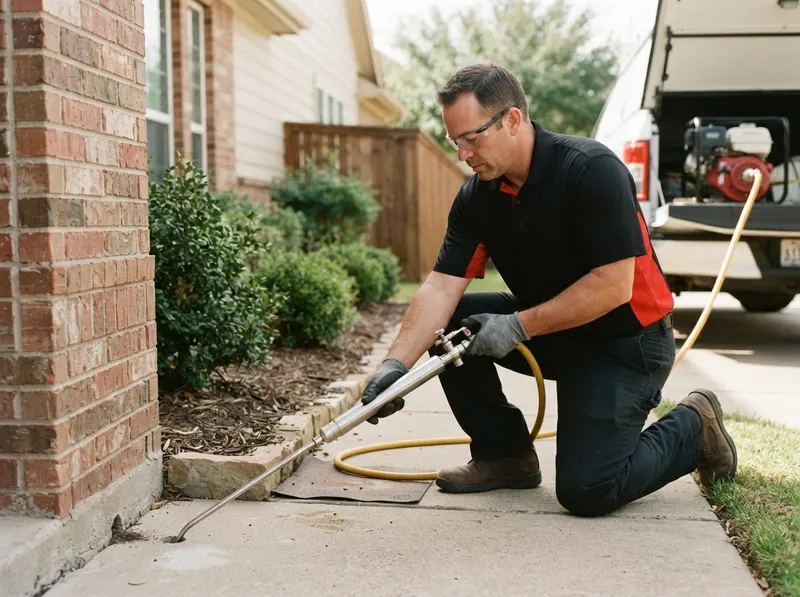
Liquid non-repellent termiticide applications and perimeter trenching along slab foundations, addressing structural infestations throughout expansive North Texas clay soil. Technicians dig 6-inch by 6-inch trenches into the soil perimeter, saturate backfill with measured termiticide solutions at four gallons per ten linear feet, and rod-inject sub-slab conduits beneath adjoining patio slabs, driveways, and garage entries to establish a uniform, unbroken horizontal and vertical barrier that termites cannot detect or bypass.
Get a quote →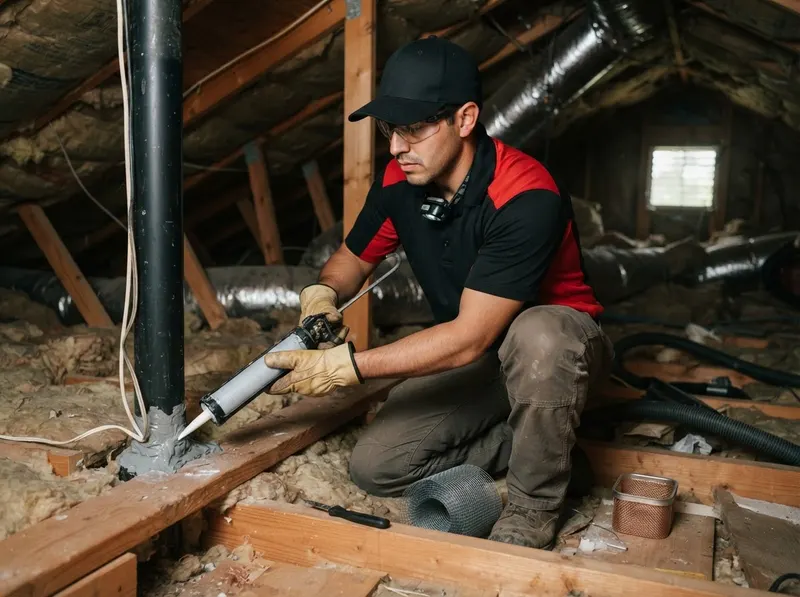
Physical entry point sealing using galvanized steel mesh along roof eaves and weep holes, coupled with insulation clearing and sanitation of attic spaces. Crews systematically seal exterior voids larger than a quarter-inch using 23-gauge galvanized wire hardware cloth, install custom steel flashing over damaged cedar fascia, clean out contaminated urine-soaked attic insulation using high-efficiency containment equipment, and sanitize floor framing with hospital-grade antimicrobial agents to remove biological scent trails.
Get a quote →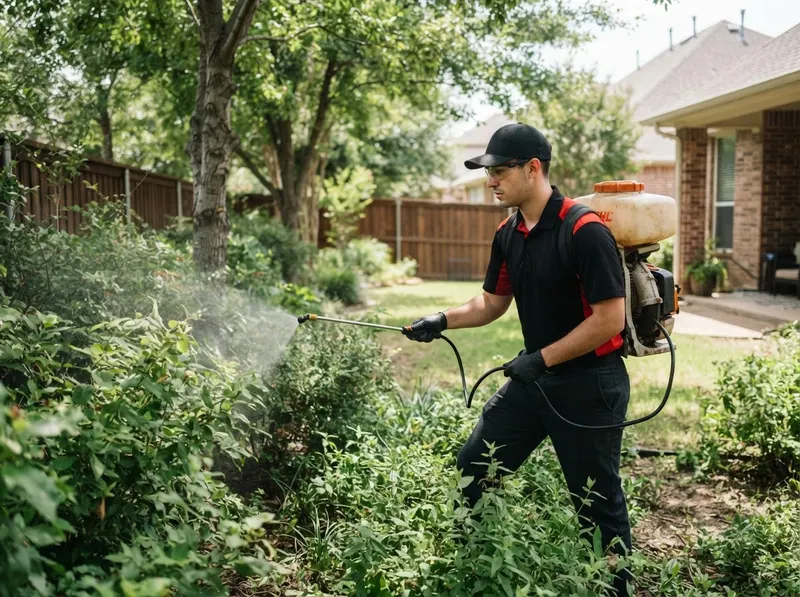
Targeted monthly barrier applications directed at damp foliage, shaded fence lines, and low-lying perimeter rest sites during summer humidity peaks. Backpack mist-blowers place microencapsulated synthetic pyrethroids and larvicidal growth regulators along the undersides of broadleaf shrubs, shaded under-deck zones, English ivy groundcovers, and exterior privacy fence borders, interrupting adult mosquito resting zones and preventing standing container larvae from maturing into biting adults.
Get a quote →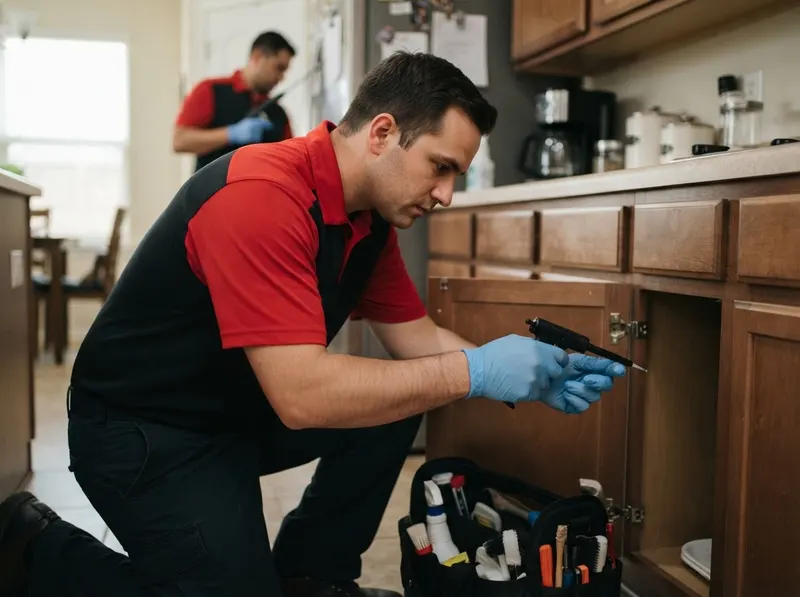
Clean-out baiting, void dusting, and insect growth regulator treatments designed for kitchen plumbing cavities, pantry crevices, and interior appliance motors. Treatments focus on sub-millimeter cracks behind refrigerator heat coils, dishwasher kickplates, sink pipe chases, and electrical outlet junction boxes using precise non-repellent gel baits and micro-fine amorphous silica dust that dehydrate breeding nymphs without repelling the population across other living areas.
Get a quote →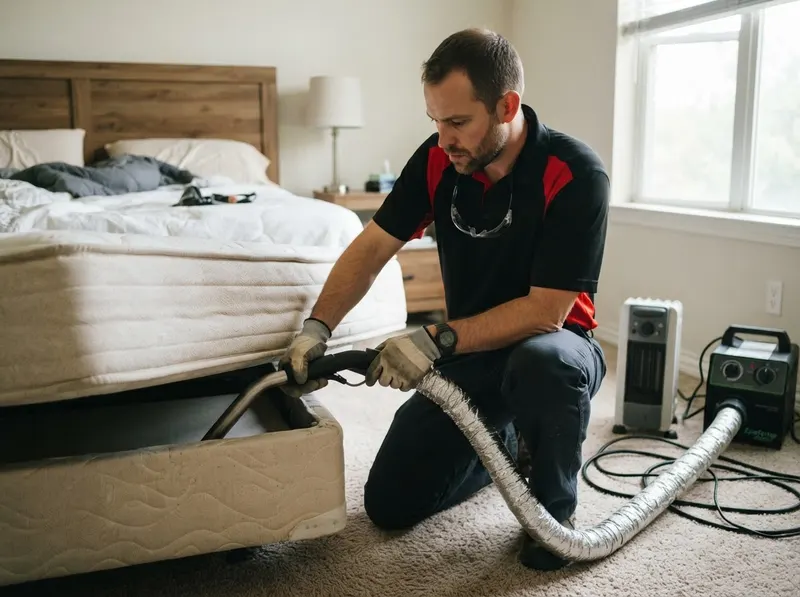
Comprehensive structural thermal remediation combined with localized residual applications for complete bed frame, baseboard, and textile insect eradication. Industrial mobile heating systems elevate ambient room temperatures to a sustained 122 to 135 degrees Fahrenheit for several consecutive hours, penetrating mattress seams, box springs, headboards, and structural crown moldings to kill all bed bug life cycles, including heat-resistant egg clusters, supplemented by long-lasting silica desiccant dust inside adjacent wall voids.
Get a quote →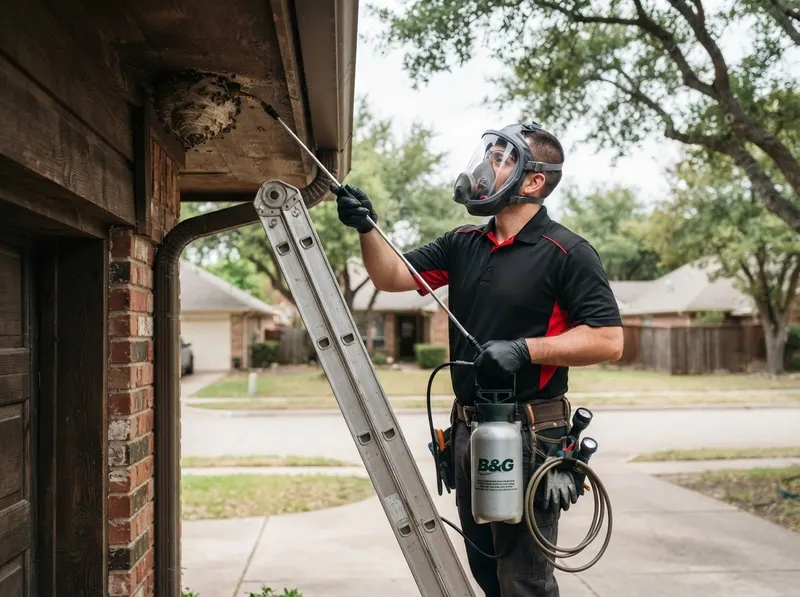
Physical removal of active paper wasp, yellowjacket, and hornet nests beneath exterior eaves, patios, and architectural overhangs without structural staining. Specialists neutralize defensive worker swarms with fast-acting, low-odor contact formulations, mechanically scrape paper comb structures from second-story soffits and decorative masonry arches, and treat anchoring substrate crevices with residual repellent dusts to stop newly arriving queens from rebuilding nests in identical locations.
Get a quote →
Two-step broadcast baiting combined with localized mound drenches to clear turf grass zones, ornamental beds, and sidewalk edges across residential lots. Granular insect growth regulator baits are calibrated across Bermudagrass and St. Augustine lawns using professional spreaders, allowing worker ants to carry the sterilizing active ingredient deep into subterranean brood chambers, followed by liquid saturations of high-hazard mounds surrounding family play structures and pool decks.
Get a quote →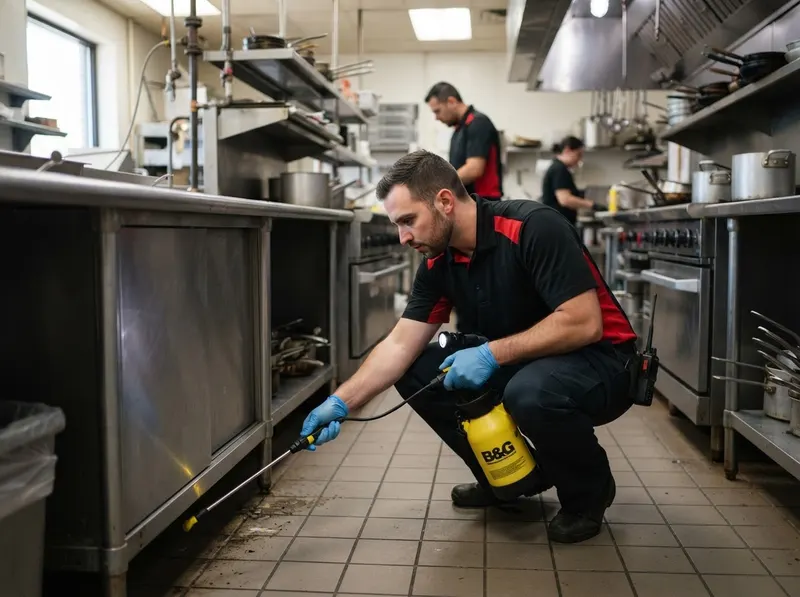
Drain bio-remediation, perimeter exclusion, and targeted non-food-contact baiting programs compliant with local Dallas municipal health department codes. Technicians treat floor drains and grease trap lines with live enzymatic bacterial foams to digest breeding organic matter utilized by drain flies, bait deep cabinet structural voids for pest roaches, and establish tamper-resistant exterior rodent monitoring bait stations around dumpster pads and commercial loading docks.
Get a quote →You get a firm, itemized quote for your pest control service before any work begins, no surprises, no pressure.
Careful prep, tidy work, and a full cleanup when we are done. We treat your home and belongings like our own.
The same trusted, background-checked team from the first call to the final check.
Selecting the correct structural treatment depends directly on target pest biology, structure construction type, and seasonal pressure. If the issue involves subterranean termites penetrating slab joints or hollow block walls, choose a non-repellent liquid perimeter trench treatment or an exterior bait monitoring station network; liquid termiticides provide an immediate subterranean barrier spanning five years or more, whereas monitoring stations require ongoing checkups every 60 to 90 days. The trade-off is higher upfront mechanical excavation cost versus ongoing monitoring maintenance.
If roof rats or house mice are active in attic crawl spaces, choose mechanical exclusion over rodenticide bait boxes alone. Mechanical sealing locks animals out permanently by closing roof returns and masonry joints, while exterior-only bait stations reduce local rodent density but leave building voids vulnerable to re-entry during autumn cold snaps. For seasonal outdoor insects like mosquitoes or perimeter ants, choose targeted liquid microencapsulated residual perimeter sprays over automated misting systems; residual sprays hold up against intense 100-degree summer heat on brick surfaces for 30 to 60 days, whereas automated misting requires complex pipe infrastructure and higher chemical volume.
For interior German cockroach infestations, select direct insect growth regulator bait placements rather than broad aerosol fogging. Growth regulators eliminate reproduction cycles inside cabinet voids without dispersing the insects deeper into electrical outlets or wall insulation. If subterranean termite colonies are detected beneath interior expansion joints or plumbing bath traps, choose localized sub-slab pressure injection using a non-repellent liquid termiticide rather than topical surface sprays; slab injection deposits termiticide directly into the base gravel where termites forage, creating an impenetrable lethal zone that eliminates colonies before workers can penetrate wooden framing studs.
For paper wasps and mud daubers nesting along two-story roof eaves, select direct mechanical knocking paired with residual microencapsulated dusting along architectural freeze boards instead of automated aerial aerosols; physical removal clears unsightly fibrous mud and paper structures instantly, while residual perimeter dusting deters future queens from rebuilding on the same fascia boards. If fire ant mounds dominate open lawn turf or turfgrass adjacent to concrete patios, deploy a two-step broadcast baiting strategy rather than single-mound contact drenches alone; broadcast baits utilize slow-acting sterilizing insect growth regulators carried deep into the primary brood chambers by foraging workers, achieving permanent colony collapse without inducing colony fracture or satellite mound relocation. For brown recluse or wolf spiders harboring inside crawlspaces and dropped ceilings, prioritize mechanical sticky monitor grids alongside localized silica micro-dust injections into dry wall voids; structural void dusting retains desiccant lethal action for over 12 months in undisturbed cavities, bypassing the quick chemical degradation that topical liquid sprays experience when exposed to fluctuating attic temperatures.
When silverfish or firebrats invade blown-in cellulose or fiberglass attic insulation, choose localized dry boric acid or silica perimeter void treatments rather than wet aqueous sprays; dry inorganic dusts do not settle or clump moisture inside thermal insulation batts, maintaining continuous mechanical desiccant protection against moisture-seeking bristletail insects. If pantry pests like Indian meal moths or sawtoothed grain beetles emerge in food storage zones, execute thorough mechanical sanitation, discard contaminated dry grain packages, and install pheromone flight traps instead of chemical perimeter spraying; mechanical food elimination starves the larvae instantly, while non-toxic pheromone traps prevent male adult reproduction without exposing human food consumables to synthetic chemical residues. For residential slab homes experiencing severe seasonal odorous house ant trailing through window weep drains, select slow-acting borate or fipronil liquid ant gel stations placed along outdoor scent highways instead of fast-knockdown pyrethroid sprays; fast-knockdown sprays trigger colony budding that splinters a single foraging colony into multiple independent nests inside interior sheetrock, whereas slow-acting baits allow worker ants to feed the queen directly, neutralizing the colony within 7 to 14 days.
Every project gets a firm, written price after a free on-site visit. Ranges below for orientation.
Tell us about your pest control service job and we'll send a clear, written quote, usually the same day. Or just call and talk to a real Dallas pro.
(945) 410-2399
Dallas properties rest on deep Houston Black clay, which expands during spring rainfall and contracts severely during sustained 100-degree summer dry spells. These continuous soil shifts create foundation hairline cracks and displace perimeter soil borders, providing direct subterranean termite highway tubes and low-resistance rodent entry paths through weep holes. In mature neighborhood canopies like Lakewood and Preston Hollow, extensive oak tree coverage promotes roof rat mobility straight onto residential shingle edges, while properties surrounding White Rock Lake and the Trinity River Audubon Center face relentless spring midge and summer mosquito breeding pressures that require calibrated perimeter treatments. Structural brick veneers across Dallas County feature open weep vents along ground-level mortar joints designed for wall moisture drainage; during the dry autumn months, these small vertical vents allow field mice and American cockroaches easy passage directly into exterior wall cavities. In the older pier-and-beam foundations found extensively throughout Oak Cliff and the Bishop Arts District, damp crawlspace soil paired with aged subfloor plumbing creates ideal microclimates for wood-destroying subterranean termites and destructive moisture ants, requiring deep sub-floor soil treatments rather than topical slab barriers. Farther north along the Preston Road and Dallas North Tollway corridors, densely landscaped residential zero-lot-line properties feature tight decorative hedges and continuous sprinkler irrigation, producing constant ground-level humidity that fosters persistent fire ant mounds and brown recluse spider populations along patio slab thresholds. The Trinity River Greenbelt and Fair Park flood basins channel heavy seasonal insect migrations directly into surrounding urban centers like Deep Ellum and Uptown, where converted loft basements, brick masonry cracks, and shared restaurant waste dumpsters demand disciplined mechanical sealing and non-toxic perimeter traps to control foraging Norway rats and German cockroaches.
Free estimates for Dallas & the surrounding area.
 Red Wagon Pest Control